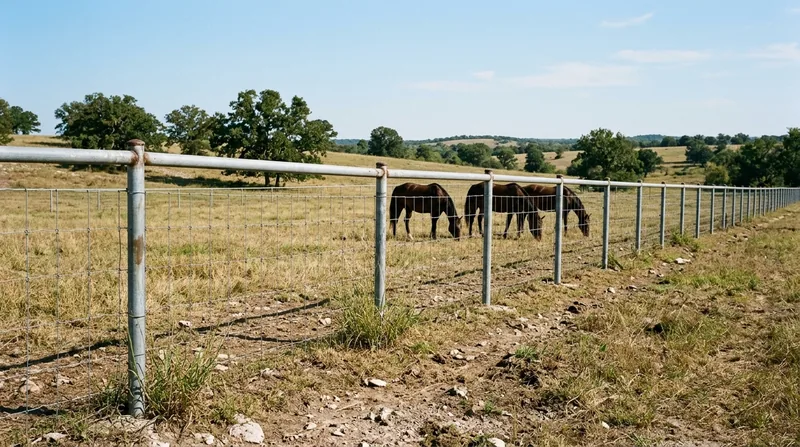




Farm fence installation in Fort Worth and the surrounding ranches west toward Aledo and Willow Park demands a different approach than residential privacy fencing. The Cross Timbers terrain runs rocky, the soil shifts with wet and dry cycles, and livestock need reliable containment through seasons of Texas weather. We set posts through that demanding ground, run wire and pipe fencing that holds cattle and horses, and build gates that function day after day without drift or sag. Since 2010, we have installed and repaired farm and ranch fencing across the Fort Worth area, and we understand what works on acreage where cattle or horses depend on the fence to stay put. Whether you need split rail for aesthetics, no climb horse fencing for safety, or pipe and wire for working ranches, we size the job to the land and the livestock.
Why Farm & Ranch Fencing Matters on Fort Worth Acreage
Residential fencing in Fort Worth neighborhoods serves privacy and boundary. Farm and ranch fencing serves containment, safety, and durability under livestock load and weather stress. A horse that leans on a privacy fence will break it; a horse that leans on proper no climb fencing or pipe fence will stay contained. Posts must be set deeper, spaced closer, and built for lateral force. Wire must be tensioned correctly and inspected for rust and gaps. Gates must swing freely and latch reliably, because a broken gate means escaped animals and liability.
- We set posts through rocky Cross Timbers soil using proper depth and concrete to resist heaving and frost shift.
- We run split rail, no climb horse fencing, and pipe and wire configurations that meet livestock containment needs.
- We install and repair ranch gates, including self-closing and self-latching hardware where needed for working operations.
- We tension wire fencing correctly to prevent sagging and maintain perimeter integrity through seasonal ground movement.
- We inspect existing ranch fencing and replace rotted posts and worn wire before animals escape or injury occurs.
Proper farm fencing keeps livestock contained, reduces liability, and holds its line through Texas heat, rain, and the clay soil dynamics that plague acreage in the Fort Worth area.
Key info: Before digging any post holes for farm fencing, Texas law requires a utility locate through 811 to mark underground electric, gas, water, and communications lines. Call 811 at least three business days before you dig, and mark the locate flags. We coordinate this on every job to protect you and our crew.
For more on what to expect from a professional fence contractor, see our guide to fence repair in Fort Worth, which covers inspection and diagnosis of damage.
How We Install Farm & Ranch Fencing on Fort Worth Properties
Farm and ranch fencing installation begins with a site walk to understand the terrain, the livestock type, the perimeter you need to secure, and any existing fence lines or structures. Rocky soil west of Fort Worth requires proper post-hole depth, concrete setting, and sometimes hand digging or power equipment to break through caliche and limestone. We measure the line, mark post locations, call 811, and then set posts at proper spacing for the fence type and livestock load. Wire gets tensioned to spec, gates get hung and tested, and the entire perimeter gets a final walk-through before we leave.
- We walk the property line with you to confirm the perimeter and identify terrain challenges like rocky soil or drainage issues.
- We call 811 for a utility locate and mark the results before we dig any post holes.
- We set posts at the correct depth for the Cross Timbers terrain, using concrete to anchor them against frost heave and livestock pressure.
- We run and tension wire fencing according to the livestock type, using proper gauge and mesh size for horses, cattle, or mixed use.
- We install gates with self-closing and self-latching hardware where you need reliable operation without manual adjustment.
- We test the entire fence line for sag, gaps, and gate function before the job is complete.
This methodical approach means your farm fencing stays tight and functional through seasons of weather and livestock use.
Local example: A 10-acre ranch near Aledo with rocky soil and mixed cattle and horses needed 800 linear feet of pipe and wire fencing with two ranch gates. We set posts 6 inches deeper than standard residential spacing, used 2-inch diameter pipe with 4x4 treated post corners, and ran 6-line no climb wire tensioned to spec. The job took five days and cost per linear foot ran higher than residential chain link due to the terrain and the pipe material, but the fence holds cattle without escape and requires no maintenance for five years or more.
See our full pricing guide at Fort Worth Fence Company pricing for detailed breakdowns by material and scope.
Farm & Ranch Fencing Methods: What Works Best
| Fencing Type | Description | Best For |
|---|---|---|
| Split Rail Fence Installation | Wooden rails mortised into posts, typically 2 to 4 rails high, set 6 to 8 feet apart for post spacing. | Decorative ranch appeal, horses and small livestock, properties where aesthetics matter as much as containment. |
| No Climb Horse Fence Installation | Welded wire mesh fencing with rigid openings too small for hooves, mounted on wooden posts with horizontal stringers. | Horse safety, preventing injury and escape, properties where livestock pressure and durability are critical. |
| Pipe Fence Installation | Galvanized or powder-coated steel pipe in 2 to 2.5 inch diameter, welded or bolted to corner posts and set in concrete. | Working ranches with cattle, maximum durability, rocky or difficult terrain where wooden posts would rot or heave. |
| Barbed Wire Fence Installation | High-tensile or standard barbed wire strung on wooden posts, typically 4 to 5 strands for cattle, 5 to 7 for horses. | Large pastures and working ranches, lower cost per linear foot, open sight lines, traditional livestock containment. |
Each method has distinct advantages depending on your livestock type, terrain, and long-term maintenance tolerance. We recommend the method that fits your animals, your soil, and your budget.
Farm & Ranch Fencing Cost in Fort Worth: What to Expect
Farm and ranch fencing costs vary widely based on terrain, material, and the livestock you are containing. Split rail fencing starts from around $8 to $12 per linear foot depending on post spacing and rail quality. No climb horse fencing runs from $10 to $16 per linear foot because of the welded mesh and the labor to install it correctly. Pipe fencing on rocky Cross Timbers terrain costs more upfront, starting from $15 to $25 per linear foot, because of the material, the specialized equipment to set posts through limestone and caliche, and the welding or bolting required. Barbed wire fencing is the most economical, starting from $3 to $6 per linear foot for materials and labor, but that price assumes existing posts or new wooden posts that we set.
What drives the cost up from the starting price? Terrain is the biggest factor. Rocky soil west of Fort Worth toward Aledo and Willow Park requires hand digging, powered augers, or even partial rock removal before posts can be set. Soft or clay soil in lower Fort Worth goes faster and costs less per foot. The second factor is post spacing. Livestock fencing requires closer post spacing (4 to 6 feet) than residential fencing (6 to 8 feet), which means more posts and more labor. The third is gate complexity. A simple wire gate costs less than a self-closing self-latching ranch gate with heavy-duty hinges and a latch mechanism. Slope and drainage also matter. Fencing on a hillside takes longer to lay out and install than fencing on flat ground.
We recommend getting two or three estimates from qualified contractors before you commit. Each should include a site walk, a specific material recommendation, a linear foot count, and a total job price. Ask about post spacing, wire tension specs, and what happens if the contractor finds unexpected rock or utility lines during installation.
For a detailed breakdown of pricing across all our services, visit our pricing page. For a free on-site estimate tailored to your property and livestock needs, call us at (817) 632-6893 or request an estimate online.
Farm & Ranch Fencing Near Me: What Fort Worth Homeowners Should Know
Hiring the right contractor for farm and ranch fencing in Fort Worth means understanding what qualifies a professional and what questions to ask before you sign a contract. We are fully insured, and we are an AFA Member Installer with the American Fence Association. We have been in business since 2010, and the same crews that start your job finish it. That matters because farm fencing is not a weekend project. It requires knowledge of local soil, livestock containment codes, and gate mechanics that come from years of hands-on work.
When you call a contractor near Fort Worth for a farm fencing estimate, ask these questions: Do you have references from similar ranch properties in the area? Do you know the soil conditions and setback rules in your county or city? Will you call 811 before digging? What is your warranty on posts and gates? How do you handle rock or caliche in the ground? Can you provide a written scope and timeline before you start? A professional will answer clearly and without hesitation.
Permits for farm fencing vary by county and city. Some jurisdictions require a permit for any fence on residential or rural property, while others do not. We coordinate with the local building department on your behalf to understand what is required. HOA rules also apply in some rural master-planned communities, so check your deed restrictions before you design the fence. If your property backs a public road or a corner lot, setback rules may limit how close to the property line you can build.
For a free consultation on your farm or ranch fencing project, contact Fort Worth Fence Company or call (817) 632-6893. We respond within 24 hours with a time to visit your property and walk the line with you.
Farm & Ranch Fencing in Fort Worth: Pricing Guide
| Service | Price | Details |
|---|---|---|
| Split Rail Fence Installation | Starting at $8 to $12 per linear foot | Wooden rails mortised into posts, includes post setting and rail installation, cost increases with post spacing and rail quality |
| No Climb Horse Fencing | Starting at $10 to $16 per linear foot | Welded mesh fencing with rigid openings, includes posts, stringers, and mesh installation, terrain and post spacing affect final cost |
| Pipe Fence Installation | Starting at $15 to $25 per linear foot | Galvanized or powder-coated steel pipe on rocky Cross Timbers terrain, includes post holes, concrete, pipe, and welding or bolting labor |
| Barbed Wire Fencing | Starting at $3 to $6 per linear foot | High-tensile or standard barbed wire strung on wooden posts, most economical option for large pastures and working ranches |
| Ranch Gates with Hardware | Starting at $400 to $1,200 per gate | Includes gate frame, hinges, latching hardware, and installation, self-closing and self-latching options cost more than standard |
| Free On-Site Estimate | No charge | Response within 24 hours at (817) 632-6893, includes site walk, terrain assessment, and detailed recommendation |
Indicative pricing, the exact cost depends on square footage, finish, and site access. Free personalized estimate within 24h at (817) 632-6893.


